
Taxes are one of the most important means of the government’s revenue collection and the real estate sector
of Pakistan is one of the key targets for taxation due to which this sector is one of the most heavily taxed industries
which also makes it one of the biggest contributor to the GDP of Pakistan.
Taxation is essential for a systematic running of every country as it helps to assist the public, develop infrastructures
and use the tax money for the society’s welfare.
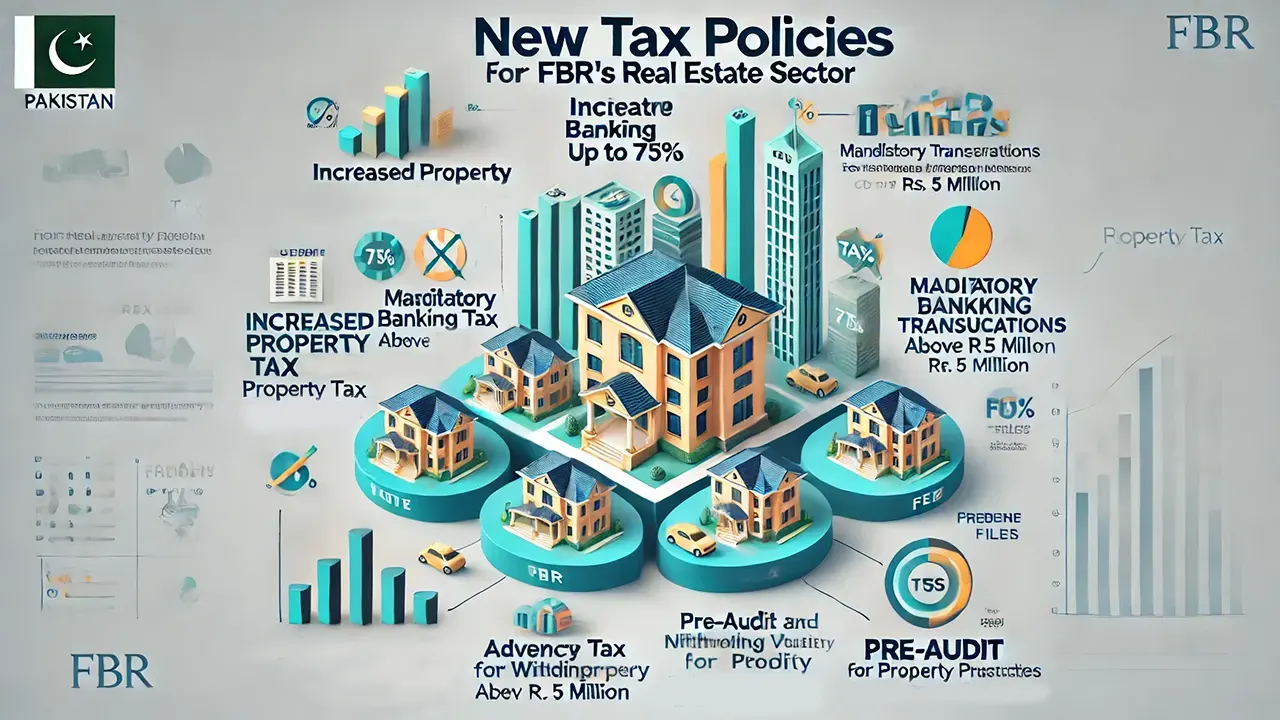
The FBR has introduced some new property taxes in the 2024-2025 budget depending on the tax status of all individuals.
In this blog we will dive into the new taxes and how they are impacting the real estate market of Pakistan.
What Are Investment Apartments?
Investment apartments are residential units that are purchased solely with the intention of an investment and not for personal use or immediate occupancy. The primary purpose of this investment is to be able to generate income through rental income or capital appreciation.
There are four main types of property taxes in Pakistan:
Capital Gain Tax (CGT)”
Capital Value Tax (CVT):
Advance Property Tax (Withholding Tax):
Federal Excise Duty (FED):
CGT is the profit that is earned by selling immovable properties.
CVT is the tax charged on immovable properties such as buildings, houses or land and it is to be paid by the buyer.
This tax is to be paid at the time of property transactions like registration or allocation and is applicable to both commercial and residential properties. It is applied to both the buyers and the sellers.
This tax is charged during booking, allotment or transfer of any property.
Tax policies implemented by the FBR and their impact on buyers and investors:

Compulsory banking channels for property transactions:
Changes in policy for Non-filers:
Altered property valuation rates:
Tax reforms and incentives:
Pre-audit of sales and lifestyle edits:
According to the new policy of FBR that came into implementation from 20th September 2024, all transactions involving immovable properties that exceed Rs.5 million need to be streamlined through the official channels of bank such as demand drafts or crossed cheques to make sure that all significant property deals have a documented financial trail as it will help encounter tax evasion and increase transparency.
Non-filers are those people who are not registered as tax payers. From September 2024, the FBR has increased measures to be taken on non-filers; Individuals not registered as tax payers are now restricted from transactions related to banking or property. Non-filers will be prohibited from purchasing properties or other financial instruments and they can only become involved in limited kinds of property transactions. Those who declare their incomes above 10 million will be allowed to benefit from these privileges but they will be subjected to higher tax rates where as others that have an income below this threshold may need to justify the sources of their income before making any kinds of major purchases. The purpose of these new policies is to extend the tax base and improve compliance.
In order to boost tax revenue on property transitions, the FBR is planning to increase the rates of property evaluation by up to 75% with the aim to increase transparency and a reduction is underreporting to make sure market values closely reflect the official valuations. Although this change in policy may slow down transactions and restrain investments as there could be a destabilization of the market due to a significant hike. Real experts believe that it is better to gradually implement this method so that the market can adjust accordingly.
In order to encourage affordable housing development and first time homebuyers, the FBR has announced major tax reforms to
strengthen the real estate market. Some of these measures also include a reduction in withholding taxes and reviewing the
5% Federal Excise Duty (FED) on property transactions and dealings.
The main aim of these reforms is to encourage economic activities in the real estate sector, promote affordable housing and make property
ownership easily accessible to more people by reducing the financial barriers that come with high taxes.
Income verification:
Pre auditing all sales and inspecting lavish purchases was granted by the FBR in December 2024 under the Tax laws amendment
bill for property purchases that are more than the declared incomes of all individuals. Additional verification is required for
any property purchases that exceed 130% of the buyers declared income to make sure that all significant purchases are backed up by
their declared income in order to reduce potential risks of underreporting so that all taxpayers align their declared income with
their lifestyle and assets accordingly.
This pre-audit measure helps encourage transparency in transactions that are of high value and also avoid tax evasion.
The above tax policies by the FBR are likely to have a diverse impact on buyers and investors. Here’s how:
Higher costs for buyers:
- An increase in property valuation rates by up to 75% will result in an increase in stamp duties for buyers and a higher capital gains tax as it will lead to an increase in the official purchase price of the properties.
- Higher taxes on non-filers will lead to a reduction in cash-based buyers who avoided documentation previously.
Difficult financial documentation:
- By implementing mandatory banking channels for all property transactions and payment above 5 million will make it nearly impossible to make cash payments which will increase transparency but also add bureaucracy.
- Underreported earning will be discouraged due to lifestyle audits as buyers will have to justify income sources for purchases exceeding 130% of their declared incomes. This might also result in a reduction in property purchases.
Reduction in investments:
- Higher costs and stricter policies will end up slowing down the market activity in the real estate sector and many buyers and investors main delay purchases for some time.
- As a result it may also impact liquidity and resale opportunities for buyers as investors that are interesting in short term gain may end up exiting the market due to the new policies.
Potential benefits for first time buyers:
A reassessment of the 5% FED and a reduction in withholding tax will benefit first time home buyers as the FBR is planning to provide
reliefs and incentives for them to neutralize the rising costs.
The new tax policies being implemented by the FBR are beneficial for first time home buyers and those who are looking for long-term investments
while result in a reduction in undocumented transactions and speculative trading as these policies will help promote tax compliance and improve
transparency but it will also complicate transactions and increase costs simultaneously.