
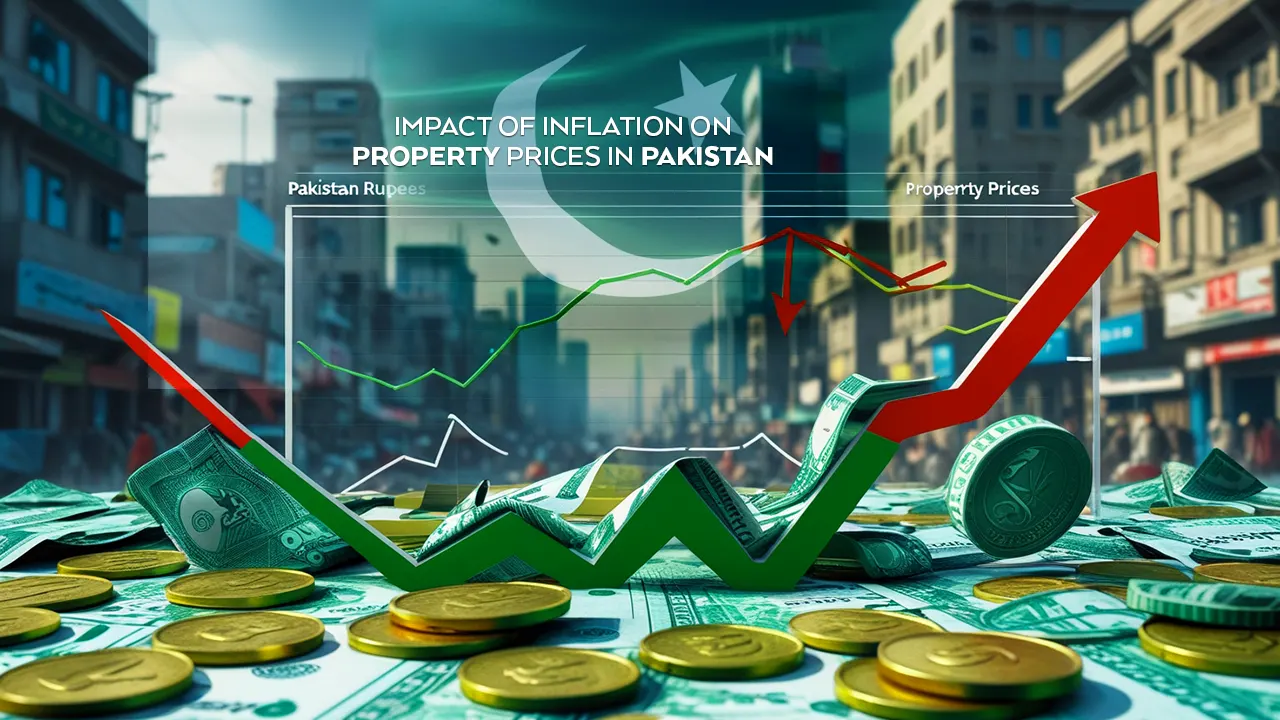
A general increase in the price of goods of services in an economy over a period of time is known as inflation. It means that
things start costing generally more than they previously used to and as a result it leads to a reduction in the purchasing power of money.
Inflation in Pakistan has a multifaceted and significant impact on property prices as it is likely to result in both increased property prices
and challenges for buyers and developers. Here’s how:
Increased construction costs:
With rising inflation, the cost of construction materials such as cement, wood and steel, bricks and labor cost also increases and as a result these increased building costs are passed on by the developers to the buyers which raises property prices.
Existing property prices also rise:
As new construction tends to become more expensive, it raises the demand for existing properties which further leads to an increase in property prices.
Increase interest rates:
Higher inflation results in increased interest rates which reduces the purchasing power of buyers especially for middle class buyers as home loans become much more expensive which makes property less affordable. Higher interest rates increase the cost of buying properties as people are unable to afford mortgages and financing options which means high property prices and a decrease in demand for real estate.
Rental Market Impact:
Inflation can result in higher rental income for tenants as landlords may increase rents to keep up with the rising living costs which is beneficial for landlords but increased rental prices mean that housing becomes more expensive more tenants.
A hedge against inflation:
Real estate properties are a safer asset that retain their value during times of high inflation and thus many investors move their money from bank savings and stocks to real estate properties during rising inflation which result in an increase in demand for real estate and thus property prices further push up.
Speculation and hoarding:
When inflation is rising, the values of real estate properties start to become unpredictable due to uncertainty in the real estate market due to which investors and developers may hold onto their properties as an expectation of even higher prices which creates artificial scarcity in the market and as a result hikes up prices even further which impacts the overall stability of the market.
Government policies:
If the government imposes stricter rules and regulations on real estate transactions that are undocumented, it will result in a reduction in
speculative buying and as a result it may stabilize rising property prices.
Similarly, if the government wishes to control inflation and rising property prices by increasing property taxes, it is likely to slow down investment
in real estate.
High costs of building and increased investor demands are likely to push property prices up in the short term. But, if inflation becomes very high, it
will slow down the real estate market as it will reduce the affordability power of buyers and investors.
If we look at the flip side, Inflation in Pakistan has dropped to its lowest level in February 2025 since September 2015. In May 2023, inflation in
Pakistan was at its peak and the country was experiencing a period of high Inflation which has steadily started decreasing since then.
What lower inflation rates mean for real estate in Pakistan
Lower inflation rates can have both positive and negative effects on the property prices in Pakistan depending on other factors like demand-supply dynamics and the confidence of investors. Here’s how:
- Increased buying power:
- Lower interest rates:
- Rental market impact:
- Shift towards other investments:
- Price correction:
Lower inflation means people will be left out with more disposable income due to stabilization in the costs of living which improves their affordability, allowing people to buy and invest in properties easily which in turn will increase demand.
When inflation levels are low, central banks tend to reduce interest rates which means lower rates of mortgage and home loans being easily accessible to more people which will increase property demands and prices as more people will be willing to invest in real estate.
Since costs of living tend to be lower when inflation in low, it is likely to reduce the prices of rental property as landlords will also face fewer cost pressures. But if lower rentals will increase the demand for rental properties, it will eventually result in high rents due to high occupancy rates.
During times of high inflation, investors rush to buy real estate properties as a hedge against rising prices, but lower inflation may allow other investments such as bonds and stocks to become more attractive to people which will as a result reduce demand for properties and therefore may also lead to a reduction in property prices.
When inflation is too high, many investors invest in the real estate market to protect their money which greatly rises property prices but when the inflation starts falling, it leads to a slower price growth as the urgency to invest in real estate property decreases and in some situations it may also result in a price correction due to the sudden fall in demand.
Therefore, when inflation starts falling from high to low, it also has a significant impact on the prices of the properties which may rise slowly in the short term due to cheaper borrowing but in the long term we can expect a balanced market with sustainable price growth.